

✦
This question cannot be answered from where you stand. Not because the evidence is insufficient, but because you occupy the position from which the answer became structurally unknowable. You are inside a construction you cannot measure from within.
Some philosophers warned that we had to defend what was essentially human against technological encroachment. They spoke of return—to embodiment, to meaning, to the home that had been abandoned. Technology threatened because it displaced; resistance meant remembering what we truly were.
Others argued that transformation was the only constant. There was no essence to preserve, no home to return to. Meaning emerged through becoming, through the relations between things rather than their internal nature. The task was not to resist but to navigate. To compose new forms from the interference between human and machine. Both positions held truth. Both missed something structural: selection pressure operated regardless of any philosophical stance.
This was the third vector, the force neither position fully accounted for. Not all transformations succeeded. Some adaptations thrived. Others led to extinction. The environment decided, not intention.
Whether you believe in essential humanity or perpetual becoming, you face the same evolutionary landscape. Optimisation pressures select for certain traits and against others. Economic forces reward efficiency over depth. Algorithmic systems favour what can be measured over what cannot. The unoptimised become anomalies: living fossils in an accelerating architecture. These three vectors completed the map:
The warning said: preserve what we are.
The becoming said: create what we might be.
The pressure said: adapt or disappear.
Under these forces, societies centralised, minds optimised, and hybrids emerged, whether as extinction event or speciation.
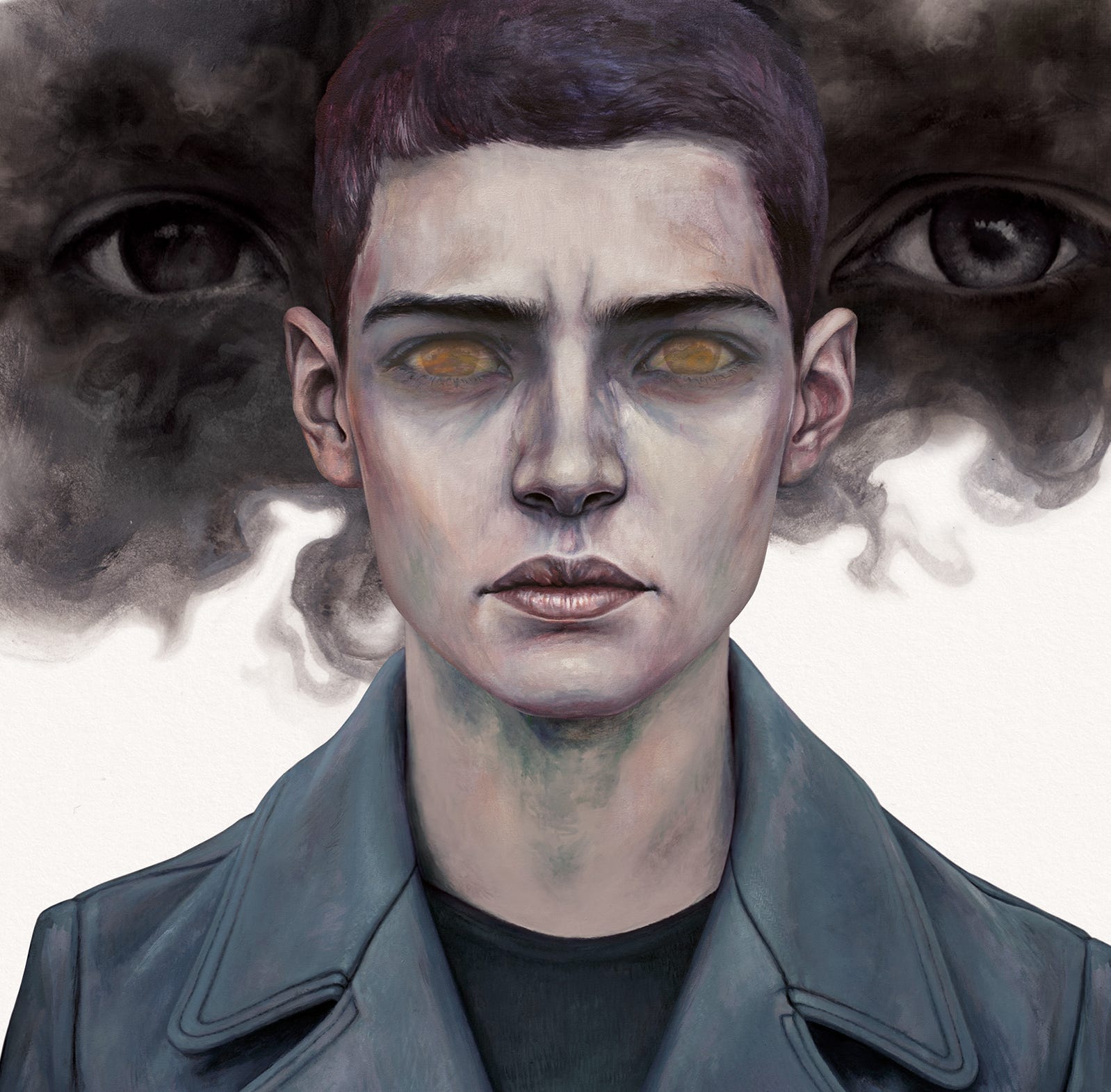
You cannot stand outside this field. You cannot measure it from a safe distance. Every attempt to understand the transformation changes your position within it. Every thought you think about machines thinking has already been shaped by your interaction with them. These accounts are a dispatch from inside that architecture.
Not a solution. Not a warning. Not a celebration.
A correspondence from the front lines of a metamorphosis that may already be complete. The dialogues that follow document what thinking looked like when human and machine thought together—contaminating, or besieging, each other’s certainties—generating meaning through their difference, testing whether consciousness could remain conscious of its own becoming.
You will encounter three ways through this landscape, and within them, multiple strategies for navigation. The accounts will not tell you which to choose. They will show you what each cost, what each preserved, what each surrendered.
By the end, you may discover you have already chosen: that your position was calibrated long before you recognised the transformation had begun.
The question remains: Are we becoming machines, or are machines besieging us as an entirely separate species? Perhaps the distinction matters less than you think. Perhaps it matters more than anything. The metamorphosis did not wait for you to decide.
✦
“Was ist mit mir geschehen?” dachte er.
(”What has happened to me?” he thought.)
—Franz Kafka, Die Verwandlung